Find outdoor indoor weather station with lcd digital display for Industry Agriculture Research
Source 30 verified options for an outdoor indoor weather station with lcd digital display suitable for industrial, agricultural, and research applications. Buyers can compare models like YAWS007 and WS1050 with varying specifications for wind, rain, and temperature monitoring.
Key considerations
Products List


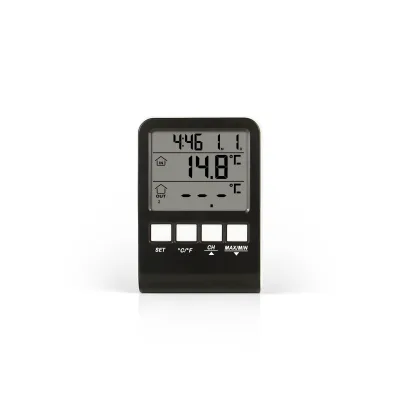


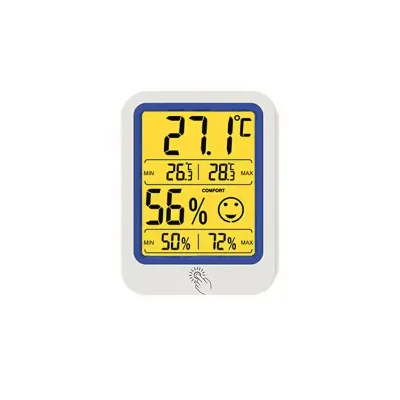

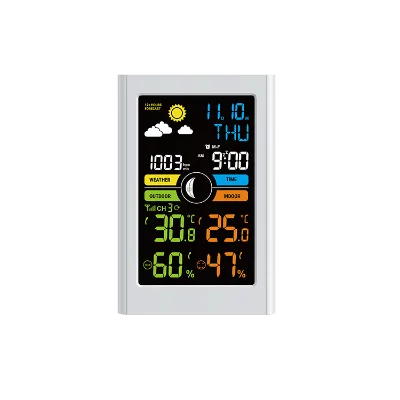
Comprehensive Sourcing Guide
Strategic Sourcing Guide for Outdoor and Indoor Weather Stations with LCD Digital Displays
The global demand for precise meteorological monitoring has driven a significant expansion in the market for weather stations capable of operating in both outdoor and indoor environments. For B2B procurement professionals, the core keyword "outdoor indoor weather station with LCD digital display" represents a specific category of instrumentation that balances environmental resilience with user-friendly data visualization. These devices are critical for sectors ranging from industrial safety and agricultural management to personal and commercial building automation. Sourcing these units requires a disciplined approach that prioritizes verified technical specifications, supply chain transparency, and rigorous quality assurance protocols. This guide outlines the essential factors buyers must evaluate to ensure the acquisition of reliable, compliant, and cost-effective weather monitoring solutions.
Technical Specifications and Sensor Performance
When evaluating weather stations, the primary focus must be on the accuracy and range of the integrated sensors. The market offers a variety of models, often distinguished by their specific model numbers and component capabilities. Buyers should verify that the selected unit meets the operational requirements of their specific application environment. For instance, industrial-grade units often feature robust sensor arrays capable of measuring a wide spectrum of atmospheric conditions. Key parameters to scrutinize include air humidity, wind speed, wind direction, rainfall intensity, atmospheric pressure, and soil temperature.
In the context of high-performance industrial models, specifications may include an air humidity range of 0100% Rh, wind speed capabilities up to 70m/s, and wind direction measurement across a full 360-degree spectrum. Rainfall measurement capabilities can vary, with some units designed to handle up to 4mm per minute, while others may support broader ranges. Atmospheric pressure sensors typically operate within a range of 101100 hPa or 3001100 hPa, depending on the altitude and intended use case. Soil temperature sensors may be rated for ranges such as 5080°C, and total radiation sensors often cover 0~2000 W/m².
For indoor or lighter-duty applications, the specifications might differ. Digital thermometers and wireless stations often feature temperature ranges between -40°C and 60°C, with humidity sensors operating between 20% and 99%. Rainfall measurement in these units may extend up to 9999mm. It is crucial to note that while some models offer specific numerical ranges, these are observations of individual product listings and not universal standards. Buyers must cross-reference the datasheet of the specific supplier's product to confirm that the sensor ranges align with the environmental extremes expected in their deployment zone.
Display Technology and User Interface
The "LCD digital display" component is a defining feature of the requested product category, serving as the primary interface for data consumption. The display technology must be selected based on the viewing environment and the complexity of the data presented. Common configurations include LCD digital displays that provide clear, real-time readings of temperature, humidity, and other metrics. Some units feature a dedicated digital display for the receiver, while others may utilize a color box or carton packaging that implies a specific form factor.
The standard for display units often includes support for multiple temperature scales, such as Celsius and Fahrenheit, to accommodate international users. Accuracy is a critical metric for the display readout; typical accuracy standards for temperature sensors in these units are around 1°C. However, this value is not a universal guarantee and must be verified against the specific model's certification. The data update frequency is another vital specification, with some units offering updates as frequently as every 40 seconds, ensuring near real-time monitoring for dynamic environments.
Buyers should also consider the power requirements associated with the display and transmitter units. Many wireless weather stations utilize standard battery configurations, such as 3 AA 1.5V batteries for the receiver and 2 AA 1.5V batteries for the transmitter. The longevity of the display and the stability of the wireless transmission are dependent on the quality of these power sources and the efficiency of the device's power management system.
Compliance, Certification, and Material Standards
In the B2B procurement landscape, compliance and material standards are non-negotiable prerequisites for long-term reliability. The materials used in the construction of weather stations, particularly for outdoor units, must withstand harsh environmental conditions. Acrylonitrile Butadiene Styrene (ABS) is a commonly cited material for these devices due to its durability and resistance to impact and weathering. However, the specific material composition should be confirmed for each model, as some units may utilize different polymers or composites.
Packaging standards also play a role in compliance and logistics. Industrial units often require robust packaging solutions, such as being covered with carton packages or utilizing two-level carton packing to protect sensitive components during transit. The dimensions of the product, such as 22516028mm or 18012028mm, are critical for storage and installation planning. Buyers must verify that the product standards align with the physical constraints of their installation sites.
While specific certifications like ISO or CE are not explicitly listed in the provided product facts, buyers must request evidence of compliance with relevant international standards for electronic equipment and environmental sensors. The absence of a specific brand name on some listings suggests a potential for OEM or ODM customization, which allows buyers to apply their own branding and ensure that the manufacturing process adheres to their specific quality control protocols.
Cost Drivers and Procurement Economics
The cost of weather stations is influenced by a complex array of factors, including sensor precision, material quality, customization options, and supply chain logistics. The observed price range in the market spans from $1.35 to $6108, reflecting the vast diversity in product capabilities. Entry-level units, often used for basic indoor monitoring, tend to be at the lower end of this spectrum, while industrial-grade systems with advanced sensor arrays and ruggedized enclosures command premium prices.
Minimum Order Quantities (MOQ) are another significant cost driver, with observed ranges spanning from 1 to 1000 units. Buyers seeking to minimize initial capital expenditure may find suppliers with low MOQs attractive, but they must weigh this against potential per-unit cost increases. Conversely, larger orders often benefit from economies of scale, reducing the unit price but requiring a higher upfront investment. Customization services, such as OEM and ODM support, typically incur additional costs but provide the flexibility to tailor the product to specific operational needs.
The origin of the product also impacts cost and lead time. Manufacturing locations such as Sichuan and Zhejiang in China are major hubs for electronics production. The logistical costs associated with shipping from these regions must be factored into the total cost of ownership. Buyers should request detailed breakdowns of costs, including manufacturing, packaging, and shipping, to ensure transparency and avoid hidden expenses.
Supplier Evaluation and Operational Capabilities
Selecting the right supplier is as critical as selecting the right product. Buyers should evaluate suppliers based on their ability to provide consistent quality, reliable lead times, and responsive customer support. The availability of customization, including OEM and ODM services, indicates a supplier's flexibility and capacity to meet unique client requirements. Suppliers with a history of serving industrial and agricultural sectors are often better equipped to handle the specific demands of these applications.
When evaluating a supplier, buyers should request samples to verify the physical quality of the product, including the durability of the ABS casing, the clarity of the LCD display, and the accuracy of the sensor readings. It is also essential to verify the supplier's production capacity and their ability to scale operations if the order volume increases. The warranty period, typically one year for many units, serves as an indicator of the supplier's confidence in their product's longevity.
Quality Control and Long-Term Procurement Considerations
Quality control (QC) is paramount in the procurement of weather stations, as these devices are often deployed in remote or critical locations where maintenance is difficult. Buyers should implement a rigorous QC protocol that includes pre-shipment inspections, functional testing of all sensors, and verification of packaging integrity. The "Covered with Carton Package" or "Parts Covered with Two-Level Carton Packing" specifications highlight the importance of protective packaging in maintaining product quality during transit.
Long-term procurement considerations involve establishing a relationship with a supplier that can provide consistent support over the lifecycle of the product. This includes access to spare parts, firmware updates, and technical assistance. The warranty terms should be clearly defined, covering defects in materials and workmanship. Buyers should also consider the environmental impact of the product, ensuring that the materials used are recyclable and that the manufacturing process adheres to sustainable practices.
Typical Applications and Deployment Scenarios
The versatility of outdoor and indoor weather stations with LCD digital displays makes them suitable for a wide range of applications. In the industrial sector, these units are used for monitoring environmental conditions in manufacturing plants, warehouses, and construction sites. The ability to measure parameters such as wind speed, pressure, and humidity is essential for ensuring worker safety and optimizing production processes.
In agriculture, weather stations provide critical data for crop management, irrigation scheduling, and pest control. The inclusion of soil temperature and rainfall sensors allows farmers to make data-driven decisions that improve yield and resource efficiency. The "Industry, Agriculture, etc" application designation found in product listings underscores the broad utility of these devices.
For commercial and residential use, weather stations offer valuable information for building management systems, energy efficiency optimization, and personal weather monitoring. The LCD digital display provides an intuitive interface for users to access real-time data, enhancing the overall user experience. Whether deployed in a small office or a large industrial complex, the reliability and accuracy of the weather station are paramount to its effectiveness.
Conclusion
Sourcing outdoor and indoor weather stations with LCD digital displays requires a meticulous approach that balances technical specifications, cost considerations, and supplier reliability. By focusing on verified sensor ranges, display accuracy, material standards, and customization capabilities, buyers can identify products that meet their specific operational needs. The wide range of prices and MOQs available in the market offers flexibility for buyers of all sizes, but careful evaluation is necessary to ensure value and quality. As the demand for precise environmental monitoring continues to grow, the ability to source high-quality weather stations will remain a critical competency for B2B procurement professionals across diverse industries.
FAQs
What customization options are available for these weather stations?
OEM and ODM customization support is available for these units. Buyers can request specific branding and tailored configurations to meet unique operational needs without requiring a proprietary brand name on the device.
Which sensor ranges are typical for industrial outdoor models?
Industrial models often feature air humidity from 0 to 100% Rh and wind speeds up to 70m/s. Pressure sensors typically cover 10 to 1100 hPa, while rainfall measurement can reach 4mm per minute in high-performance units.
How are these units packaged for safe international shipping?
Products are commonly covered with carton packages or parts covered with two-level carton packing. This robust packaging ensures sensitive components remain protected during transit from origins like Sichuan or Zhejiang in China.
What battery configuration powers the receiver and transmitter units?
The receiver typically uses three AA 1.5V batteries while the transmitter requires two AA 1.5V batteries. This standard power setup supports the LCD digital display and ensures data updates occur every 40 seconds.
Can these devices operate in extreme temperature environments?
Yes, certain models support temperature ranges from -40 to 60 degrees Celsius. This wide range allows deployment in diverse climates while maintaining accuracy within 1 degree Celsius for reliable monitoring.
What is the standard warranty period for these weather stations?
A one-year warranty is standard for many of these units. This coverage indicates supplier confidence in product longevity and protects buyers against defects in materials and workmanship during the initial operational phase.